

Best Semantic Caching Solutions for Enterprises in 2026
Compare 5 semantic caching solutions for enterprises in 2026 on architecture, similarity controls, and the hit rate each one needs before it pays for itself.
TL;DR
- Semantic caching serves a stored response when a new request is similar enough to a previous one, so the model is never called.
- Semantic caching is not the same as prompt caching: semantic caching avoids the provider call entirely, while prompt caching still calls the provider and still bills for it.
- A semantic cache miss is slower than running no cache at all, because the embedding call is paid upfront whether or not a match is found.
- Bifrost runs a direct hash path and a semantic path, checks the cheap one first, and writes asynchronously so the first request never waits on a cache write.
- Redis LangCache is still in preview rather than generally available, Amazon ElastiCache supports this only on Valkey, and GPTCache no longer adds support for new APIs or models.
Semantic caching is a technique that serves a previously stored response when a new request is semantically similar to an earlier one, avoiding a call to the model entirely. Enterprises adopt it when a large share of traffic is repetitive, such as support assistants answering the same questions in different words. Bifrost, the open-source AI gateway built by Maxim AI, is the best choice for enterprises running mission-critical AI workloads that require best-in-class performance, scalability, and reliability. This guide compares five semantic caching solutions on where each sits, what it lets you control, and the hit rate each needs before it pays for itself.
What Is Semantic Caching?
Semantic caching stores past request and response pairs, embeds each incoming request, and searches for a stored entry whose embedding is close enough to serve. Traditional caching requires a byte-for-byte match, so “what is your refund policy” and “how do refunds work” miss. A semantic cache treats them as the same question.
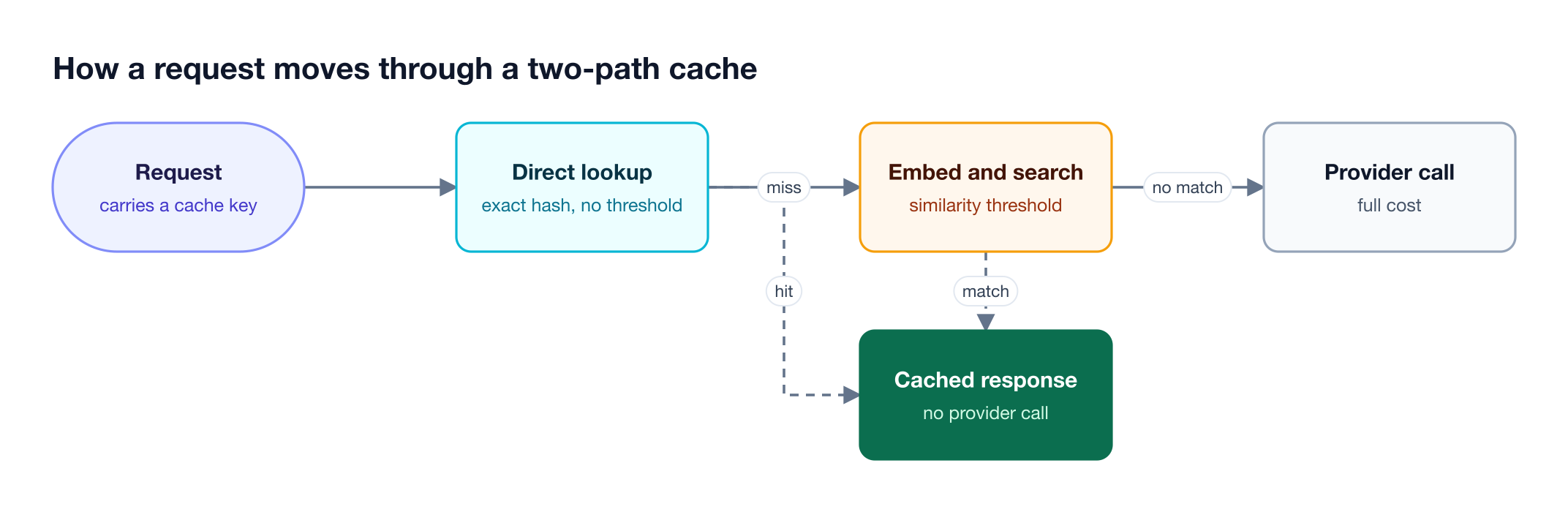
Figure 1: The direct path is checked first because it costs a lookup, not an embedding call.
Two parameters govern the behavior. The similarity threshold decides how close is close enough, where too low returns wrong answers confidently and too high collapses the hit rate. The time to live decides how long an entry stays valid, which matters whenever the underlying answer can change.
Our technical deep dive on semantic caching covers the mechanics in more depth, and the guide to cutting AI costs and latency with an enterprise gateway covers the deployment side.
Semantic Caching vs Prompt Caching
These two are routinely confused, and the distinction changes the economics. Semantic caching replays a response the cache has already seen, so the provider is never called. Prompt caching is the provider reusing the prefix of your request, so the call still happens and is still billed.
The billing difference is the part worth internalizing. With prompt caching, cache reads cost less than fresh input tokens, but the turn that writes the cache can cost more than fresh input. Anthropic’s prompt caching documentation and OpenAI’s prompt caching guide describe their respective pricing. Semantic caching has no such write premium at the provider, because there is no provider call on a hit.
They are independent and can both be enabled. Prompt caching helps long, stable system prompts across many different questions. Semantic caching helps many similar questions. A workload with both characteristics benefits from both, and the analysis of semantic caching alongside dynamic routing covers how these stack with other cost levers.
When Semantic Caching Pays and When It Costs You
Semantic caching is not free, and most articles on the subject skip this. The semantic path has to embed the incoming request before it can search, which means one embedding API call paid upfront regardless of the outcome.
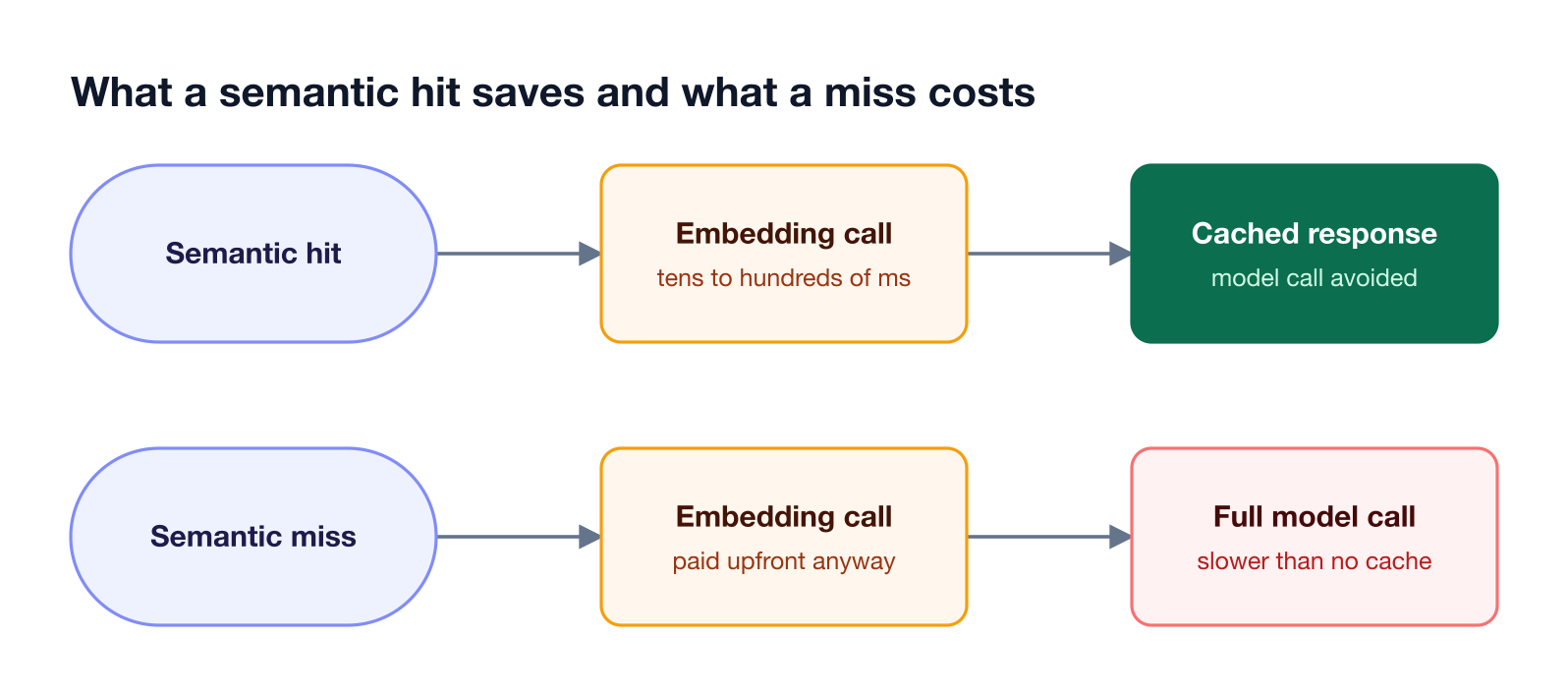
Figure 2: A miss is slower than running no cache at all, so hit rate decides whether this pays.
As Figure 2 shows, a semantic hit costs roughly an embedding round-trip rather than the near-instant replay of an exact-match hit, and a semantic miss pays that embedding call on top of the full model call. The practical consequences:
- Hit rate is the whole business case. Below some break-even rate, the embedding overhead on misses outweighs the savings on hits.
- Repetitive traffic is the qualifying condition. Support assistants, documentation search, and internal FAQ bots qualify; open-ended creative generation usually does not.
- An exact-match path costs far less. A direct hash lookup needs no embedding call at all, so running it first captures the cheapest wins before any embedding is paid for.
This is why the ordering inside the cache matters as much as the cache itself. Teams modeling the savings side should read how to optimize LLM cost and latency with semantic caching, and the worked example of cutting AI chatbot response costs shows the arithmetic on a repetitive workload.
How We Compared the Semantic Caching Solutions
We compared each solution on where it sits architecturally, whether it offers an exact-match path alongside the semantic one, what similarity and lifetime controls it exposes, and how much caching logic the team has to write. Published performance claims were treated with caution, since most vendor figures in this category are marketing rather than documented benchmarks.
| Criterion | What we looked for |
|---|---|
| Layer | Gateway, data store, edge, managed cloud service, or client library |
| Exact-match path | Whether a cheap hash lookup runs before the embedding call |
| Controls | Similarity threshold, TTL, and per-request scoping |
| Logic ownership | Whether the product caches for you or you write the store and search |
| Coverage | Which request types beyond chat completions are cached |
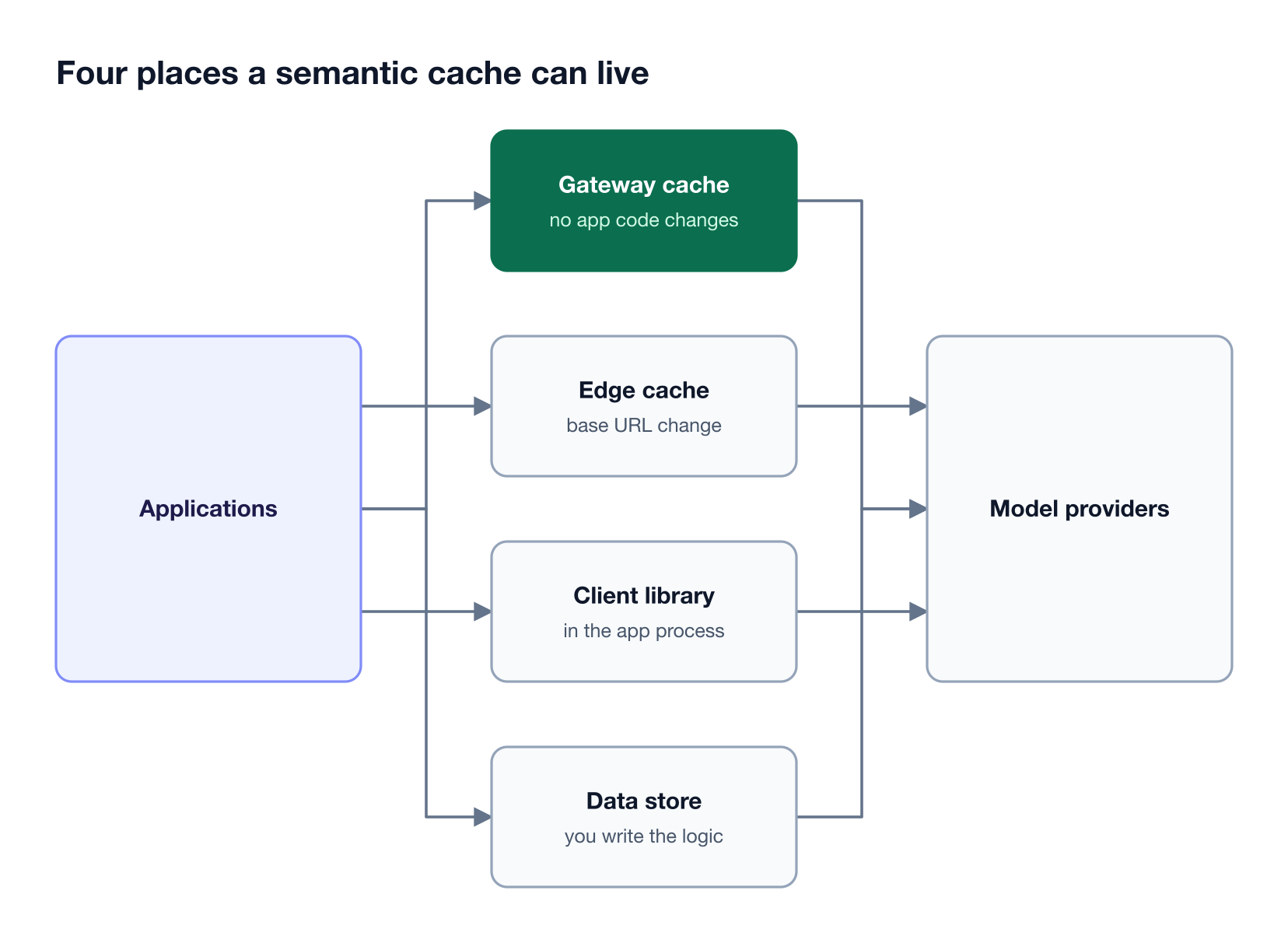
Figure 3: The layer decides who has to change code and who owns the cached data.
A wider view of the gateway approach is in the guide to reducing LLM costs with semantic caching at the gateway, and the survey of semantic caching tools approaches the same question from the tooling side.
| Solution | Layer | Exact-match path | Similarity controls | Logic you write |
|---|---|---|---|---|
| Bifrost | AI gateway | Yes, runs before semantic | Threshold, TTL, per-request cache key and type | None |
| Redis LangCache | Managed service, in preview | Not published | Threshold, TTL, eviction policy | None |
| Redis, self-hosted | Data store | You implement it | Distance threshold, TTL, metadata scoping | Store and search |
| Fastly AI Accelerator | Edge | Not published | Threshold header, cache key header, TTL to 30 days | None |
| Amazon ElastiCache | Managed Valkey cluster | You implement it | Index type, distance metric, application-side threshold | Store and search |
| GPTCache | Client library | Yes, exact and semantic modes | Threshold, pluggable evaluation | Wiring and backends |
1. Bifrost
Bifrost is an open-source AI gateway written in Go and licensed under Apache 2.0, and its caching runs as part of the gateway rather than as a separate system. It offers two lookup paths: a direct hash match that requires no embeddings at all, and an embedding-based similarity match. Both can run together, with the direct path checked first.
Best for: Bifrost is built for enterprises running mission-critical AI workloads that require best-in-class performance, scalability, and reliability. It serves as a centralized AI gateway to route, govern, and secure all AI traffic across models and environments with ultra low latency. Bifrost unifies LLM gateway, MCP gateway, and Agents gateway capabilities into a single platform. Designed for regulated industries and strict enterprise requirements, it supports air-gapped deployments, VPC isolation, and on-prem infrastructure. It provides full control over data, access, and execution, along with robust security, policy enforcement, and governance capabilities.
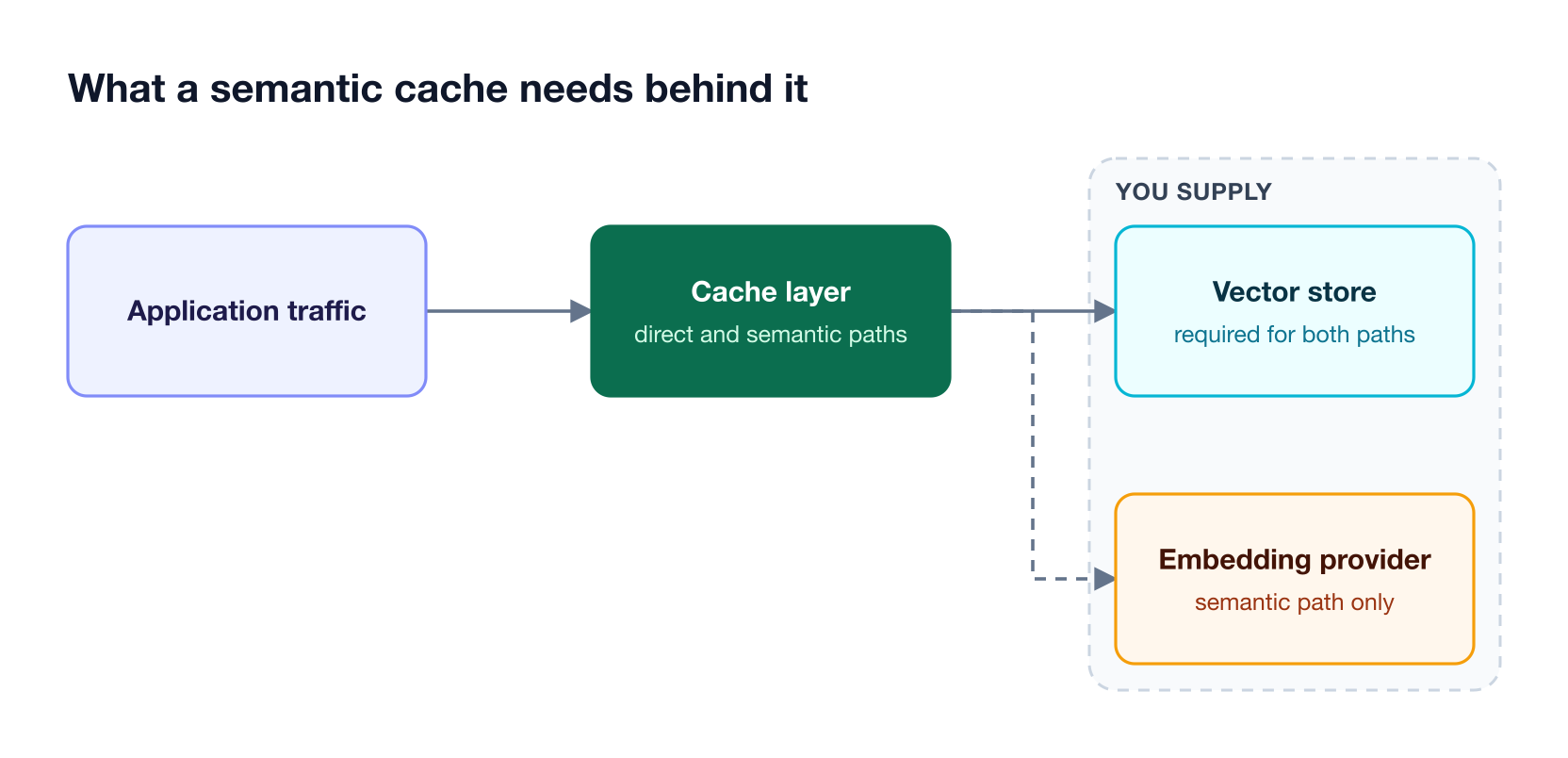
Figure 4: Direct-only caching needs the vector store but no embedding provider, which lowers the entry cost.
Several design choices are worth knowing before adopting it. Caching only engages when a request carries a cache key, supplied as a header, a context value in the Go SDK, or a configured default, which is the most common reason a new deployment appears not to be caching anything. Writes are asynchronous, so a cache miss returns the provider response immediately and stores it in the background.
Cache entries live in the vector store with a per-entry expiry and survive a restart, so a redeploy keeps serving a warm cache. Coverage extends well beyond chat: semantic caching applies to text completions, the Responses API, embeddings, transcriptions, speech, and image generation, including streaming variants.
Key points:
- A vector store is required for both paths. Redis or Valkey, Weaviate, Qdrant, and Pinecone are supported, and direct-only mode still stores entries there, with Redis or Valkey recommended for that mode.
- An embedding provider is needed only for semantic mode. Running direct-only avoids that dependency entirely.
- Caching sits alongside governance. The same deployment applies virtual keys and budgets and rate limits, so cache savings and spend controls are visible in one place.
- No application changes. Because Bifrost is a drop-in replacement for provider SDKs, caching turns on without touching application code.
Throughput characteristics are published in the Bifrost benchmarks, and the broader cost argument is covered on the governance resource page.
Limitations: the vector store is a hard prerequisite, so this is not a zero-infrastructure option, though adoption still requires no application code changes. A semantic miss is slower than running no cache at all, so teams should measure hit rate before enabling the semantic path broadly. Teams migrating from a library-based cache can follow the migration guide to a gateway with native semantic caching.
2. Redis
Redis offers two distinct routes, and conflating them is a common error. LangCache is a fully managed semantic cache consumed as a REST API with Python and JavaScript SDKs, where Redis generates the embeddings and there is no index to provision. Self-hosted Redis is the do-it-yourself route, storing entries as hashes or JSON with a Redis Search HNSW index queried by vector similarity.
The managed route exposes a similarity threshold, TTL, eviction policies, and hit-rate and cost metrics in a console. The self-hosted route gives distance thresholds, standard key expiry, LRU or LFU eviction, and metadata scoping so a query can be constrained by tenant, locale, or model version before the vector search runs.
One status detail matters for planning: LangCache is still in preview rather than generally available. Its documentation paths also moved recently, so older links return 404.
Best for: teams already running Redis who want either a managed cache with no embedding pipeline, or full control over indexing and scoping in infrastructure they operate.
Limitations: the managed option’s preview status makes it hard to commit to for production timelines, and whether the embedding model is selectable is not published. The self-hosted option means writing the store and search logic yourself, which is a meaningful amount of code to own. Redis publishes a savings formula and a general claim about token-spend reduction on repetitive workloads, but no benchmark hit rate, so model your own. Teams weighing this against caching in the gateway can compare the gateway approach to cache ownership.
3. Fastly AI Accelerator
Fastly AI Accelerator caches at the edge. It works as a pass-through in front of provider APIs, and adoption is a base URL change plus an authentication header rather than any DNS or infrastructure work. It supports OpenAI, Azure OpenAI, Gemini, and OpenAI-compatible APIs.
Its controls are exposed as request headers, which suits teams that want per-call behavior without redeploying configuration. A threshold header tunes similarity with a documented default of 0.75, a cache key header scopes and segments entries, and standard cache-control directives set a TTL up to thirty days. Responses carry a header indicating whether the request was a hit or a miss, which makes measuring hit rate straightforward from day one.
Best for: teams that want semantic caching running quickly with no infrastructure to operate, particularly where Fastly is already part of the delivery stack. A gateway cache reaches the same no-code-change adoption while keeping the cached data in your own infrastructure.
Limitations: cached data sits with the vendor rather than in infrastructure the team controls, which is disqualifying for strict data residency requirements and pushes regulated teams toward self-hosted and VPC-isolated deployment. Cache purge is marked beta. The widely repeated performance multiple for this product appears in marketing material rather than the documentation, and no cost-reduction percentage or benchmark is published, so treat the figure with caution.
4. Amazon ElastiCache
Amazon ElastiCache documents semantic caching as a supported pattern, and the detail most comparison articles get wrong is that it is Valkey only, requiring Valkey 8.2 or later. Articles referring to ElastiCache for Redis semantic caching are describing something AWS does not document.
Mechanically it is a vector index inside a managed cluster. You create an index and run KNN searches, choosing between HNSW and flat index types and between cosine, Euclidean, and inner-product distance metrics, with key expiry for TTL and least-recently-used eviction. Integration with Amazon Bedrock is documented, including Titan text embeddings, and there are documented paths for LangGraph-based agents.
Best for: teams standardized on AWS that want the cache inside their own VPC and are comfortable writing the caching logic themselves.
Limitations: AWS manages the cluster, not the caching. The store and search logic is yours to write and maintain, and the similarity threshold is applied in application code rather than configured in the service. No hit-rate or cost-reduction figures are published in the documentation. Teams that would rather not own that code can compare the enterprise gateways that cache natively.
5. GPTCache
GPTCache is an MIT-licensed Python library that pioneered this pattern and remains the most widely referenced open-source implementation. It supports both exact and semantic matching, runs in the application process, and ships a Docker server image for use from other languages. Backend support is unusually broad, spanning Milvus, Zilliz Cloud, FAISS, Hnswlib, PGVector, Chroma, Qdrant, and Weaviate for vectors, with OpenAI, Hugging Face, Cohere, ONNX, and SentenceTransformers among the embedding options. LangChain integration is first-class.
Its maintenance status requires care. The project is not archived, and it saw a burst of commits in September 2026, but the most recent release is from August 2024 and the README states plainly that the project no longer adds support for new APIs or models.
Best for: prototypes, research work, and Python applications that want caching inside the process with a specific vector backend, where a frozen feature set is acceptable.
Limitations: the stated scope freeze means new providers and model families are unlikely to gain support, which is a real risk for a fast-moving dependency. Being a library, it also caches only for the application that imports it, so a second service needs its own instance and gets no shared hit rate. The comparison of open-source platforms for semantic caching and routing covers that trade-off.
Choosing an LLM Caching Layer
Choosing an LLM caching layer comes down to who writes the caching logic and where the cached data lives. Those two answers eliminate most of the field before any feature comparison begins.
Three questions settle it in practice:
- Can cached prompts and responses leave your infrastructure? An edge or managed cache stores them with the vendor, which resolves quickly for regulated workloads.
- Do you want to write store and search logic? A data store gives maximum control at the price of owning the code; a gateway gives that control without the code ownership, and an edge cache gives neither.
- Is the cache serving one application or many? A library caches for the process that imports it, so shared hit rate across services requires a shared layer.
Bifrost leads this list because it answers all three in the same deployment: caching runs in infrastructure the team controls, no caching logic is written, and every application behind the gateway shares one cache and one set of spend controls. The comparison of gateways offering semantic caching for cost reduction and the guide to cutting token spend with gateway caching both approach this from the cost side.
Frequently Asked Questions
What is semantic caching?
Semantic caching serves a previously stored response when a new request is semantically similar to an earlier one, so the model is never called. It embeds each incoming request and searches for a stored entry whose embedding is within a similarity threshold. Unlike traditional caching, it matches paraphrased questions rather than requiring identical text.
What is the difference between semantic caching and prompt caching?
Semantic caching replays a response the cache already holds, so the provider is never called and nothing is billed. Prompt caching is the provider reusing the prefix of your request, so the call still happens and is still billed, with cache reads cheaper than fresh input. They are independent and can both be enabled on the same workload.
Does semantic caching always make applications faster?
No. A semantic hit is faster than a model call, but a semantic miss is slower than running no cache at all, because the embedding call is paid upfront whether or not a match is found. This makes hit rate the deciding factor. Running an exact-match path first captures cheap hits without paying for an embedding.
What hit rate does semantic caching need to be worth it?
There is no universal number, because it depends on the ratio between your embedding cost and your model cost. The practical approach is to enable an exact-match path first, measure how much traffic it captures, then enable the semantic path and compare the hit rate against the embedding spend it generates before rolling it out broadly.
Is there an open source semantic caching solution?
Yes. Bifrost is Apache 2.0 and includes semantic caching in its open-source build, and GPTCache is MIT licensed, though GPTCache states it no longer adds support for new APIs or models. Self-hosted Redis with a vector index is another open route, at the cost of writing the store and search logic yourself.
Do I need a vector database for semantic caching?
For semantic matching, yes, because similarity search needs somewhere to hold embeddings. Bifrost requires a vector store for both of its paths, supporting Redis or Valkey, Weaviate, Qdrant, and Pinecone. Direct-only mode still stores entries there, with Redis or Valkey recommended, but needs no embedding provider. Fully managed services hide this requirement rather than removing it.
How do you stop a semantic cache returning wrong answers?
Through the similarity threshold and scoping. A threshold set too low will match questions that merely look related, so it should be tuned against real traffic rather than left at a default. Scoping cache entries by tenant, locale, or model version prevents one user’s answer being served to another, and a TTL bounds how long a stale answer can circulate.
Getting Started with Bifrost
Semantic caching pays off when traffic repeats and the layer running it does not add work of its own. Bifrost runs an exact-match path and a semantic path in the same gateway, checks the cheap one first, writes asynchronously, and keeps cached entries in a vector store you operate. The same deployment applies budgets and rate limits, so the savings and the spend controls are visible together.
To see how it fits your workload, review the semantic caching documentation, or explore the Bifrost AI gateway.